
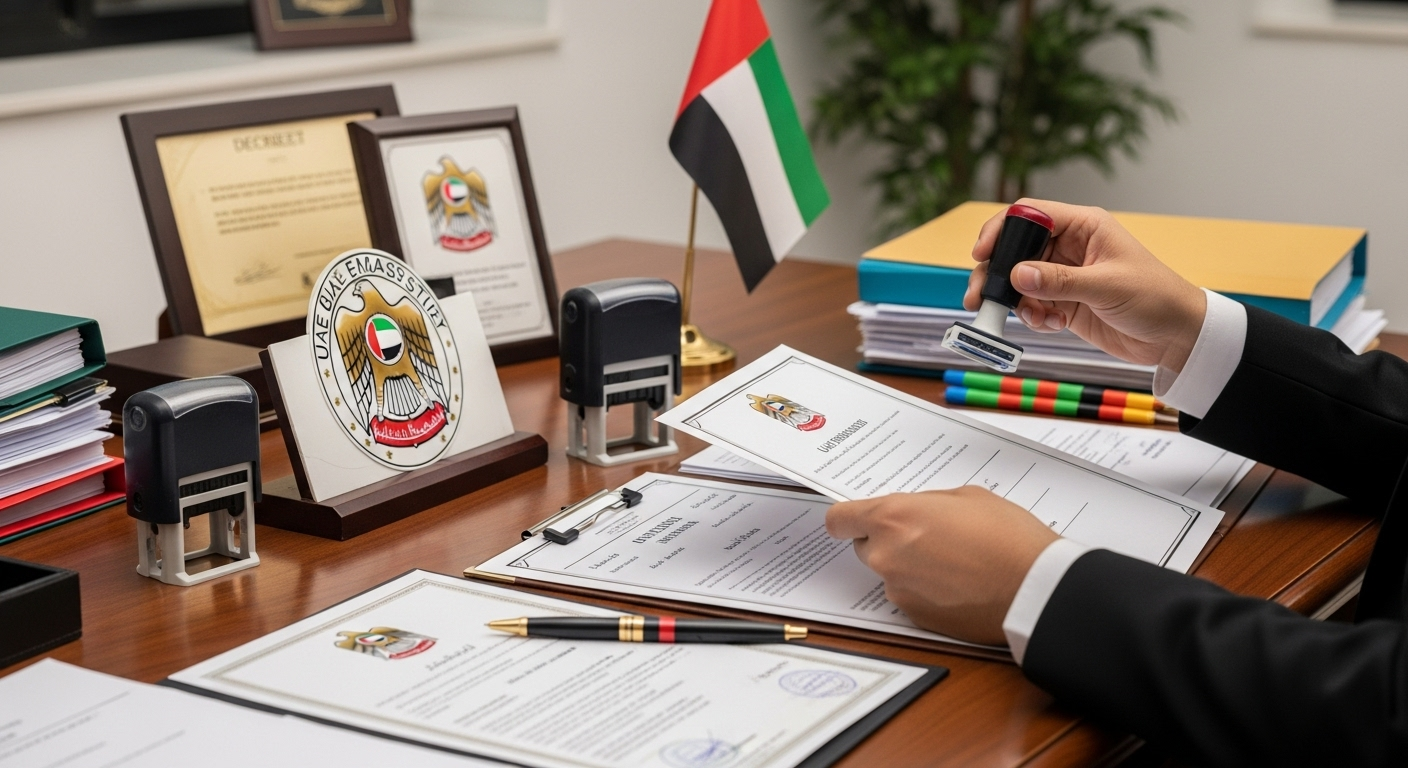
Step-by-Step Guide: How to Legalize Documents for Use in the UAE
Legalizing documents for use in the United Arab Emirates (UAE) is essential to ensure their official acceptance by government authorities, institutions, or business entities. Whether the documents are personal, educational, or corporate, they must undergo a proper authentication and legalization process.
The UAE Embassy in Washington, D.C., in collaboration with the Arab Chamber of Commerce, facilitates the legalization process for individuals and organizations in the United States, ensuring that all documents meet UAE requirements.
Understanding UAE Document Legalization
Document legalization for the UAE is the formal process that confirms a document issued in the United States is genuine and can be recognized by UAE authorities. This procedure provides legal assurance that all signatures, seals, and notarizations on the document are authentic.
Legalized documents are required for multiple purposes, including:
Personal records, such as birth, marriage, and educational certificates
Business or corporate documents, including powers of attorney, articles of incorporation, and commercial contracts
Professional certifications for employment or licensing
Step-by-Step Legalization Process
The UAE document legalization process involves several stages to ensure authenticity and compliance with UAE standards.
1. Notarization
Most documents must first be notarized by a licensed U.S. notary public. This confirms the authenticity of signatures and the legitimacy of the document.
2. State Authentication
The notarized document is then certified by the Secretary of State in the state where it was issued. This step validates the notary’s authority and signature.
3. Federal Authentication
Next, the document must be authenticated by the U.S. Department of State, confirming that it has been properly notarized and certified at the state level.
4. UAE Embassy Legalization
Finally, the document is submitted to the UAE Embassy in the USA for legalization. The embassy verifies all prior certifications and affixes an official stamp or seal, confirming the document’s recognition for use in the UAE.
Benefits of Proper Document Legalization
Legalizing documents ensures full acceptance by UAE authorities and prevents administrative or legal complications. The advantages include:
Verification of authenticity for all U.S.-issued documents
Compliance with UAE government requirements
Smooth processing of personal, educational, or business procedures
Reduced risk of rejection or additional administrative steps
Proper legalization provides individuals and businesses with confidence that their documents will be recognized and legally valid in the UAE.
Role of the Arab Chamber of Commerce
The Arab Chamber of Commerce supports applicants by reviewing documents, coordinating state and federal authentication, and submitting documents to the UAE Embassy for final legalization. This assistance helps ensure accuracy and expedites the process while adhering to all UAE Embassy authentication protocols.
FAQ
What is the difference between notarization, authentication, and legalization?
Notarization confirms the authenticity of signatures on a document. Authentication verifies the notarization at the state and federal levels, and legalization by the UAE Embassy confirms official recognition in the UAE.
Can educational certificates be legalized for the UAE?
Yes. Diplomas, transcripts, and degrees must be notarized, authenticated, and legalized before they are recognized in the UAE.
How long does the UAE document legalization process take?
Processing times depend on the issuing state, federal authentication, and UAE Embassy workload, generally ranging from several days to a few weeks.
Do all documents require UAE Embassy legalization?
No. Some documents may only require notarization or state authentication, but official guidance should be confirmed to ensure UAE compliance.