
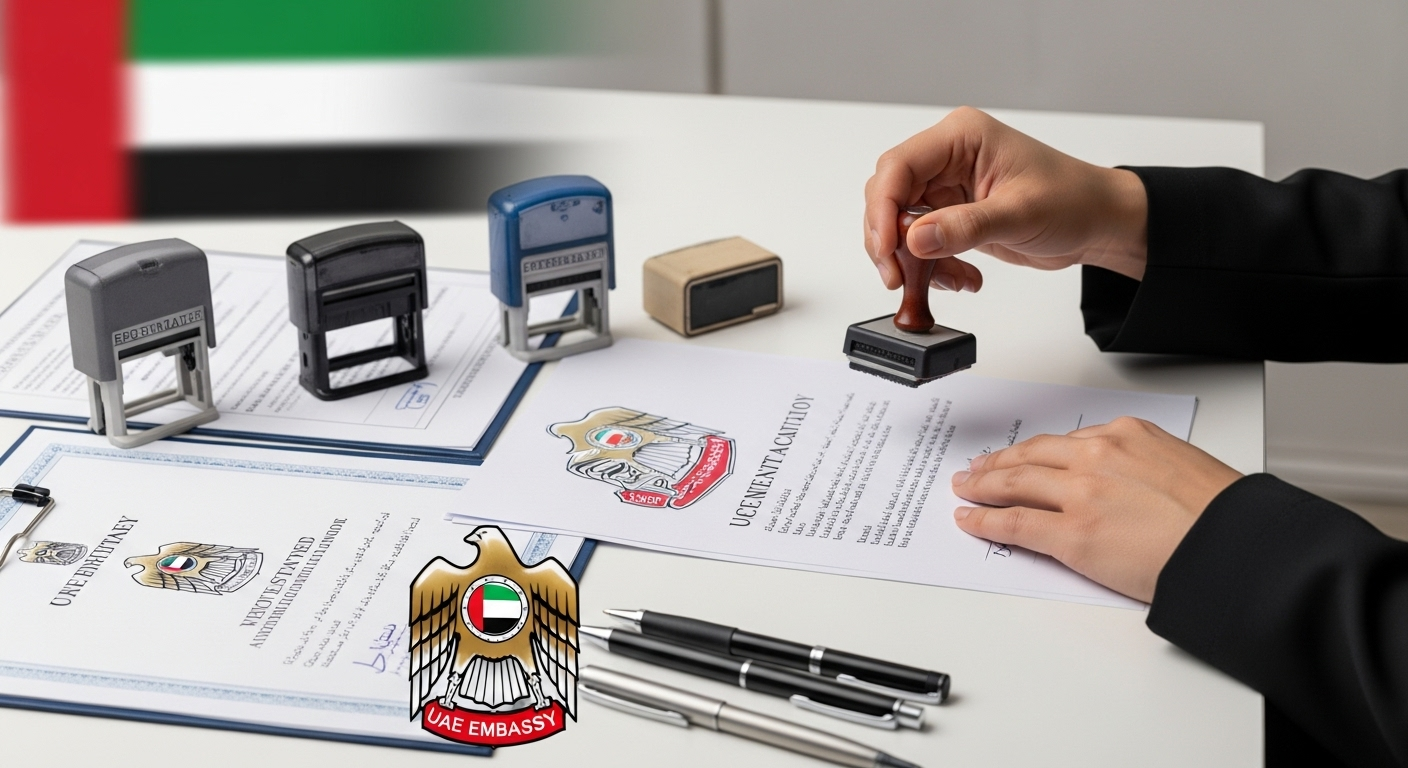
Why the UAE Is Not a Member of the Apostille Convention
The United Arab Emirates (UAE) is not a participant in the Hague Apostille Convention, which standardizes document recognition among member countries. As a result, documents originating from foreign countries, including the United States, must follow a specific legalization and authentication process to be recognized by UAE authorities.
The UAE Embassy in Washington, D.C., together with the Arab Chamber of Commerce, ensures that all documents meet UAE requirements, providing guidance for individuals and businesses seeking legal recognition.
Understanding the Apostille Convention
The Apostille Convention, officially known as the Hague Convention of 1961, allows documents issued in one member country to be certified for legal use in another member country without further authentication by embassies.
Since the UAE is not a signatory, documents issued abroad cannot use the apostille system for automatic recognition. Instead, documents must be authenticated and legalized through UAE Embassy procedures.
Legalization Process for Non-Apostille Countries
For countries not part of the Apostille Convention, including the UAE, document legalization typically involves several steps:
1. Notarization
Documents are first notarized by a licensed U.S. notary public to confirm authenticity of signatures and content.
2. State-Level Authentication
Notarized documents must be certified by the Secretary of State in the state where they were issued.
3. Federal Authentication
The notarized and state-certified documents are then authenticated by the U.S. Department of State.
4. UAE Embassy Legalization
Finally, the documents are submitted to the UAE Embassy in the USA for legalization. The embassy reviews all prior certifications and applies its official seal, confirming validity for use in the UAE.
This multi-step process replaces the simplified apostille method used in member countries.
Documents Typically Requiring UAE Embassy Legalization
Personal Documents:
Corporate and Commercial Documents:
Proper preparation and authentication ensure that these documents are accepted by UAE authorities for official, legal, or business purposes.
Why UAE Chooses This Approach
The UAE maintains strict verification standards for all foreign documents to ensure authenticity and prevent fraud. By requiring formal legalization and embassy authentication, the UAE:
Confirms that documents are genuine and properly issued
Protects individuals and businesses from invalid or fraudulent records
Ensures full compliance with UAE legal and administrative standards
This system provides confidence that all foreign documents meet UAE requirements before they are used in legal, educational, or commercial contexts.
Role of the Arab Chamber of Commerce
The Arab Chamber of Commerce assists applicants by:
Reviewing documents for compliance with UAE Embassy requirements
Coordinating notarization, state authentication, and federal authentication
Submitting documents to the UAE Embassy for final legalization
This support streamlines the process and helps applicants avoid errors or delays during legalization.
FAQ
Why is the UAE not part of the Apostille Convention?
The UAE has chosen not to participate in the convention in order to maintain strict verification standards and prevent document fraud.
Can documents from Apostille countries be legalized for the UAE?
Yes. Even if a document comes from an Apostille country, it must undergo UAE-specific legalization at the embassy.
How long does the UAE document legalization process take?
Processing times vary depending on the issuing state, federal authentication, and UAE Embassy workload, generally ranging from several days to a few weeks.
Do personal and corporate documents follow the same legalization process?
Yes. Both personal and corporate documents require notarization, state and federal authentication, and UAE Embassy legalization for official recognition.